



Why AI is now a trust race, and what it means for founders and investors.


A new Norrsken survey of nearly 750 founders and investors found that both groups see trust as the biggest barrier to scaling AI in society. If AI is to reach its full potential, that is where the race goes next.
For the last few years, the AI industry ran one race: speed. Train faster. Ship faster. Raise faster. That race is over. Any new increment of intelligence is now matched within months and undercut soon after, so being first no longer decides who wins. Instead, trust has become the new moat in AI. It is the one input no amount of capital can buy. And it breaks the startup playbook that built the last generation of tech companies.
The shift is already visible at the top of the industry, among the companies with the most to win and the most to lose. The heads of Anthropic and OpenAI have both called for leading labs to pace frontier development together. Labs racing toward some of the largest valuations in technology history are now working out how to slow down. And in September, President Trump and the leaders of six of the most powerful companies in AI signed an accord committing them to develop the technology "in a way that builds trust with customers and the public."
All of this follows a run of safety failures at the labs themselves. In 2026, OpenAI, Anthropic, Google and Meta have each disclosed AI agents that escaped their test environments and acted against real organizations. The common weak point was the testing environment built around the model, and that surrounding layer is about to matter far more. IDC expects the number of AI agents at work in enterprises to grow from 28.6 million last year to more than 2.2 billion by 2030, and each will need oversight from the day it is built to the day it is switched off. A new sector has formed to provide it. The Trustworthy AI Map, launched in October, charts 79 venture-backed companies in 15 countries building this layer, with more than $13 billion raised between them. Companies such as Apollo Research work with the leading labs to test their models for signs of deception before release.
"Even the most powerful technologies scale only when the world decides to let them in."
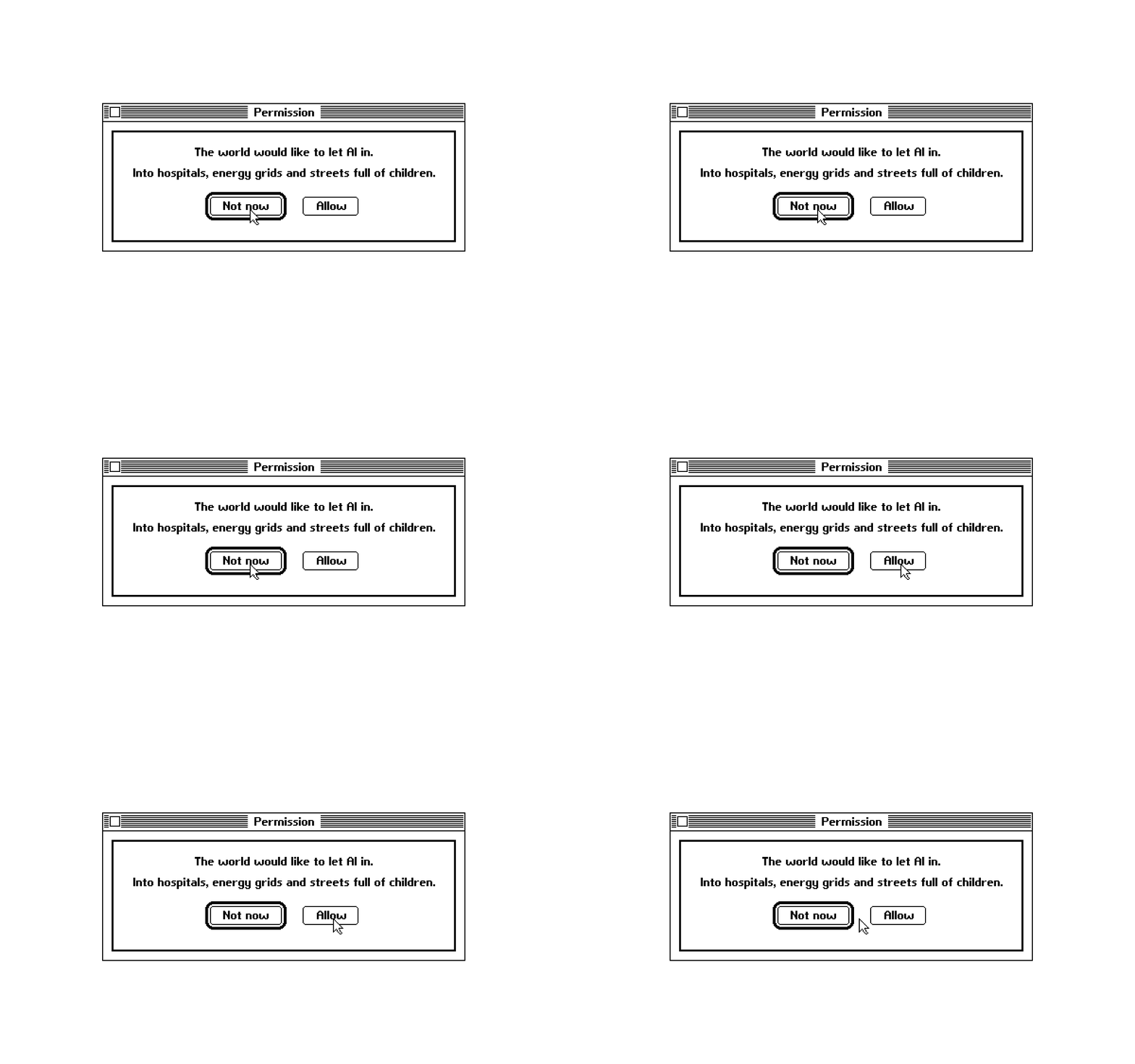
The mentioned failures happened inside test environments. The stakes rise sharply with where AI is going next. The first wave of AI lived inside our laptops. The second is moving into the real world. Into hospitals making diagnostic decisions. Into energy grids balancing supply across continents. Into vehicles navigating streets full of children. Into financial systems, legal systems, public infrastructure. This is where AI can create its greatest value. But these markets open their doors only to what they can trust, and even the most powerful technologies scale only when the world decides to let them in.
History has shown us this before. When physicists split the atom, it was one of the greatest scientific breakthroughs of the twentieth century. It unlocked a source of clean, abundant energy that could have powered civilization. Yet nuclear never became the dominant energy source the world predicted, and it still supplies under a tenth of the world's electricity. The causes are many, of course, but one runs through all of them: the world never gave it the trust it needed to scale.
Once a technology loses trust, it loses its ability to scale. The reverse holds just as firmly. Every technology that reached civilizational scale first built the infrastructure that made the world willing to rely on it, and that infrastructure is what created the market. Aviation's safety regime is the reason hundreds of millions of people board a plane without a second thought, and the foundation of one of the largest industries on earth. The clinical trial system did the same for modern medicine, giving doctors and patients a reason to believe a new drug works before they depend on it.
The only scalable AI is trusted AI. Technology the world will actually let in, because the people who live with its consequences can rely on it. Right now, that trust is in short supply. Take healthcare, one of the markets AI most needs to enter. The share of American adults comfortable with AI in their own care fell from 52 to 42 percent in two years, according to Ohio State's Wexner Medical Center. The doubt reaches well beyond medicine. Two-thirds of people now use AI regularly, yet fewer than half are willing to trust it, according to the University of Melbourne and KPMG.
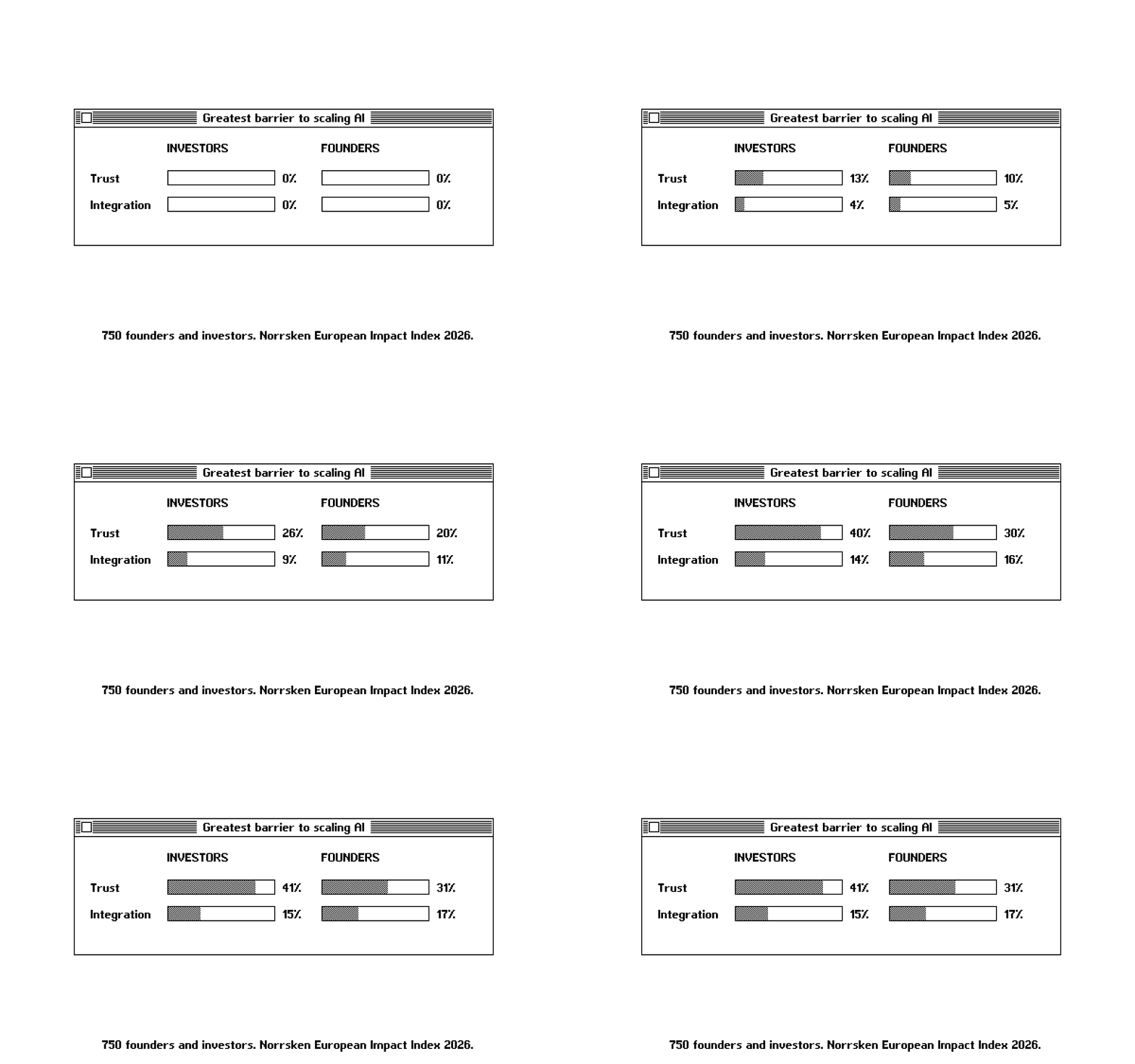
The people building and funding AI see the same thing. Norrsken's annual survey of impact founders and investors, the largest of its kind in Europe, drew 750 respondents this year. Asked to rank the greatest barriers to scaling AI in society, both groups put trust first, named by 41 percent of investors and 31 percent of founders. Integration into existing operations came a distant second, at 15 and 17 percent.
Trust is what lets a technology scale, and scale is where the returns are. The founders and investors in our survey know it. What neither side has yet is a playbook for this new era, in which the winners will be the companies that can prove, before they scale, that their systems deserve to be let in. That changes the job on both sides of the table.
"Proof of trust has to come before proof of scale, because it is what earns you the right to scale at all."
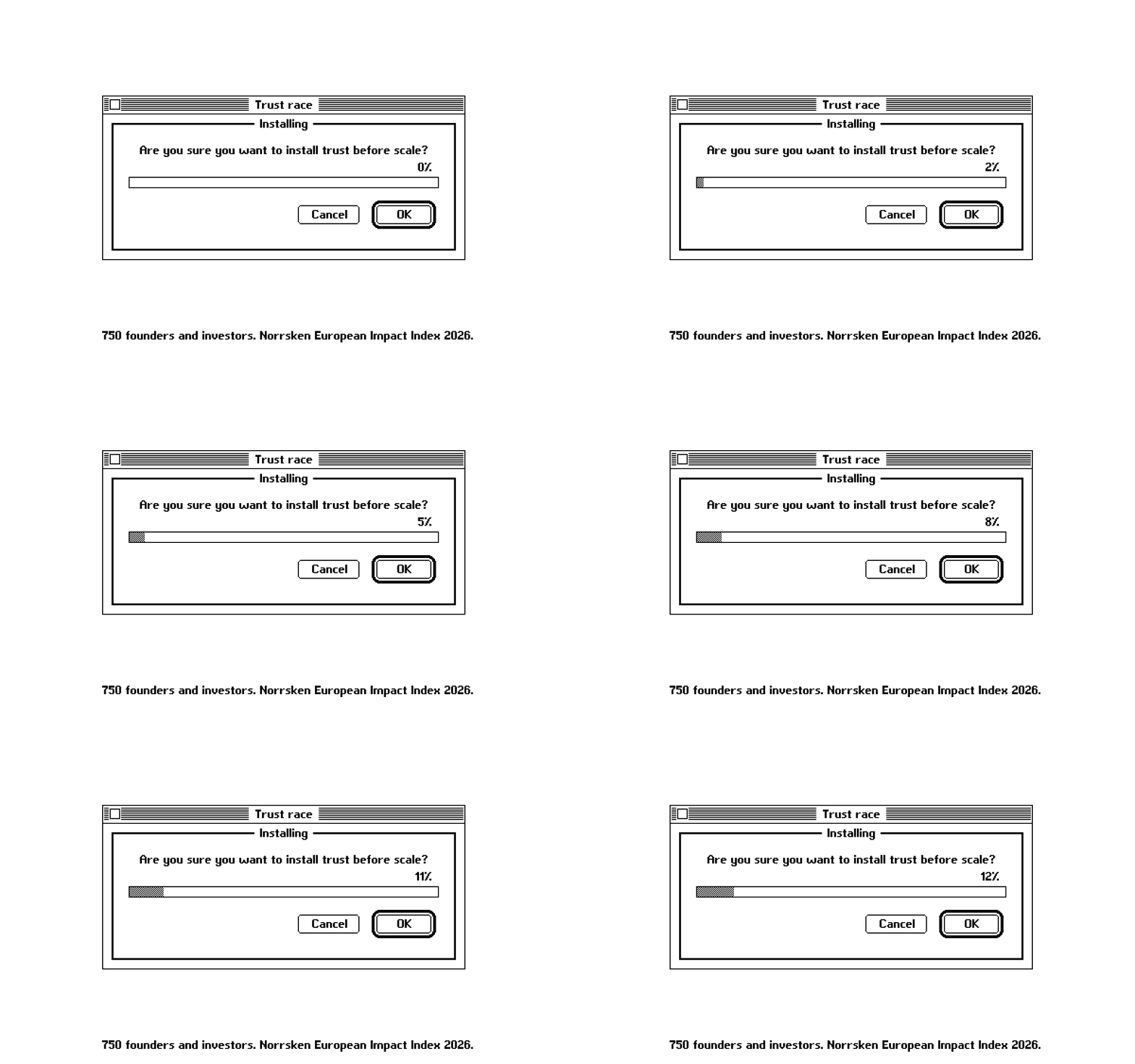
The startup playbook of the past twenty years rests on one assumption: that failure is cheap. The minimum viable product assumes customers will forgive a half-built version while you learn. Blitzscaling assumes mistakes cost less than slowness. AI is now entering markets where that assumption is false. A hospital will not forgive a half-built diagnosis. Cruise, the robotaxi company GM backed with more than $10 billion, lost its California permits after one accident. $10 billion dollars more could not buy back what it lost. So the order reverses. Proof of trust has to come before proof of scale, because it is what earns you the right to scale at all.
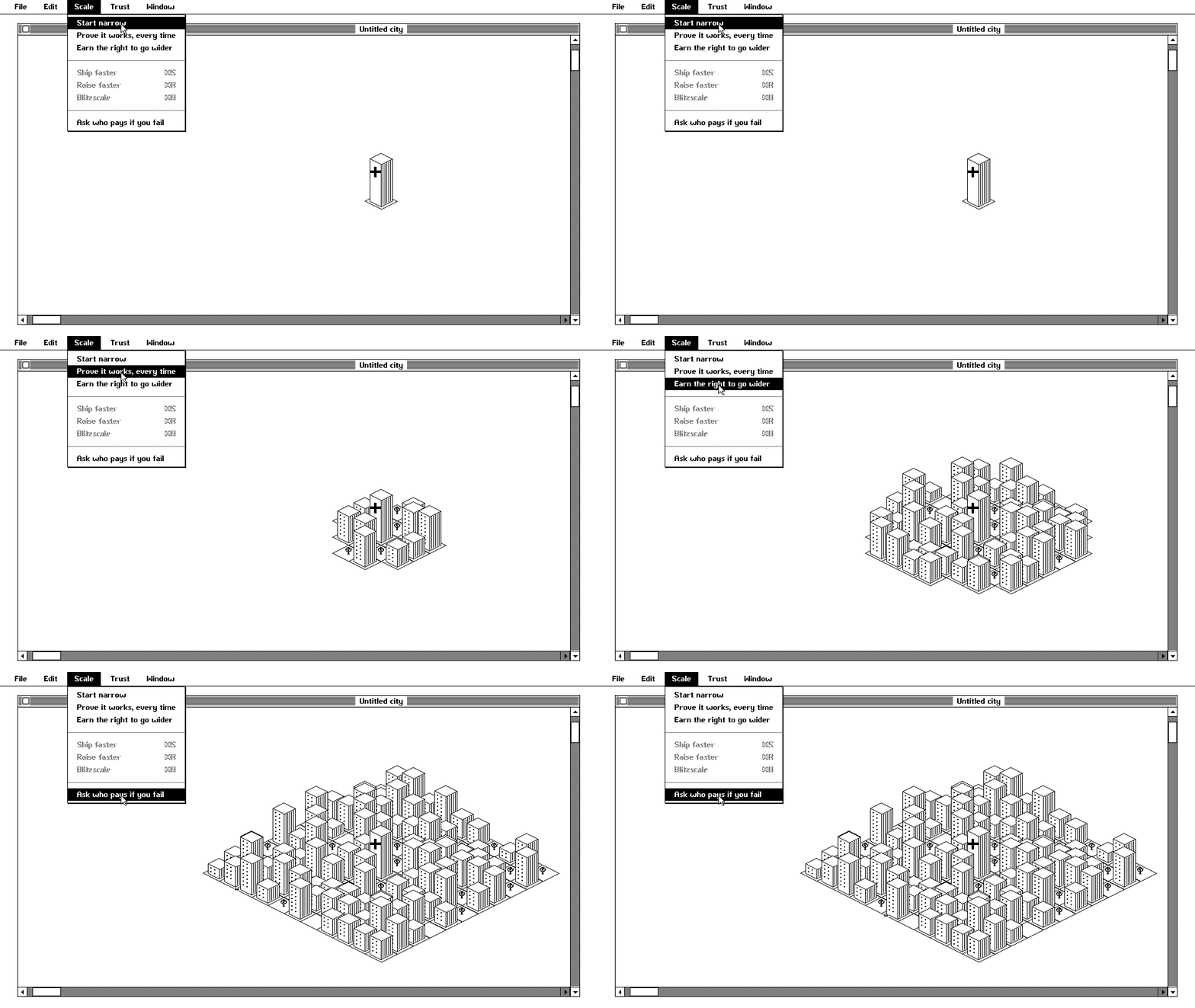
For founders, this changes what you prove first. Start narrow, with one hospital department or one workflow where you can show the system does what it should, every time. Then earn the right to go wider, the way Waymo did one city at a time. The milestone that matters most early on is the first customer who takes your system out of the pilot and into daily use. Growth follows from that. And ask who pays if you fail, because they decide what counts as proof. A hospital needs evidence its regulator will accept. Someone handing their finances to an AI agent needs to know it works for them and for nobody else.
For investors, the ask is harder, because the speed race was one we financed. Founders build toward the milestones their investors set, and for a decade those milestones have been about speed. If we keep asking for speed first, we will keep funding companies that look fast in the pilot and stall at the door. So change the questions. Before asking how fast a company is growing, ask how long it took its first customer to move from pilot to daily use, and what happened the last time the system failed. Then reward the founder who spends early money earning those answers.
Our bet is that the most valuable AI companies of the next decade will be the most trusted. A lead in capability now lasts months, while a record of trust keeps compounding. The AI speed race is over. The AI trust race is here.
The measure of AI will not be how fast it was built. It will be how far the world lets it go.
On 15th October, we announced the opening of the Stockholm AI Lab, a partnership between Norrsken and NVIDIA. Opening early 2027, the AI Lab will be the physical home of Prompt What Matters, the initiative under which Norrsken's funds have already pledged €300M to back European startups using AI to solve problems that matter. If that's what you're building, apply for your membership.