
.gif)




Today we publish the European Impact Index 2026 – the largest annual survey of founders and funders fixing our hardest problems.


This year, 750 respondents told us how Europe looks from the inside: what is getting better, what is still getting in the way, and where they think the biggest opportunities lie.
One idea runs through the findings.
We call it Europtimism.
Two years ago, the question doing the rounds was whether Europe was still worth betting on. Fair question at the time.
Since then, geopolitics has given the continent something of a wake-up call. Mario Draghi handed Europe an uncomfortable mirror and a rather long to-do list. Brussels started talking seriously about becoming the world’s first electro-continent. EU Inc turned years of founder frustration into a campaign policymakers could no longer ignore.
None of Europe’s problems have magically disappeared. But the mood has changed. The continent seems to be spending a little less time discussing what is wrong with Europe – and a little more time trying to fix it.
This year, the numbers suggest founders and investors have noticed.

Both the people building companies and the people backing them say Europe has become a more attractive place over the past twelve months. Half of investors say the continent is more attractive to invest in than it was a year ago, against roughly one in four who say the opposite. Among founders, four in ten see Europe becoming more attractive as a place to build – almost twice the share moving the other way.
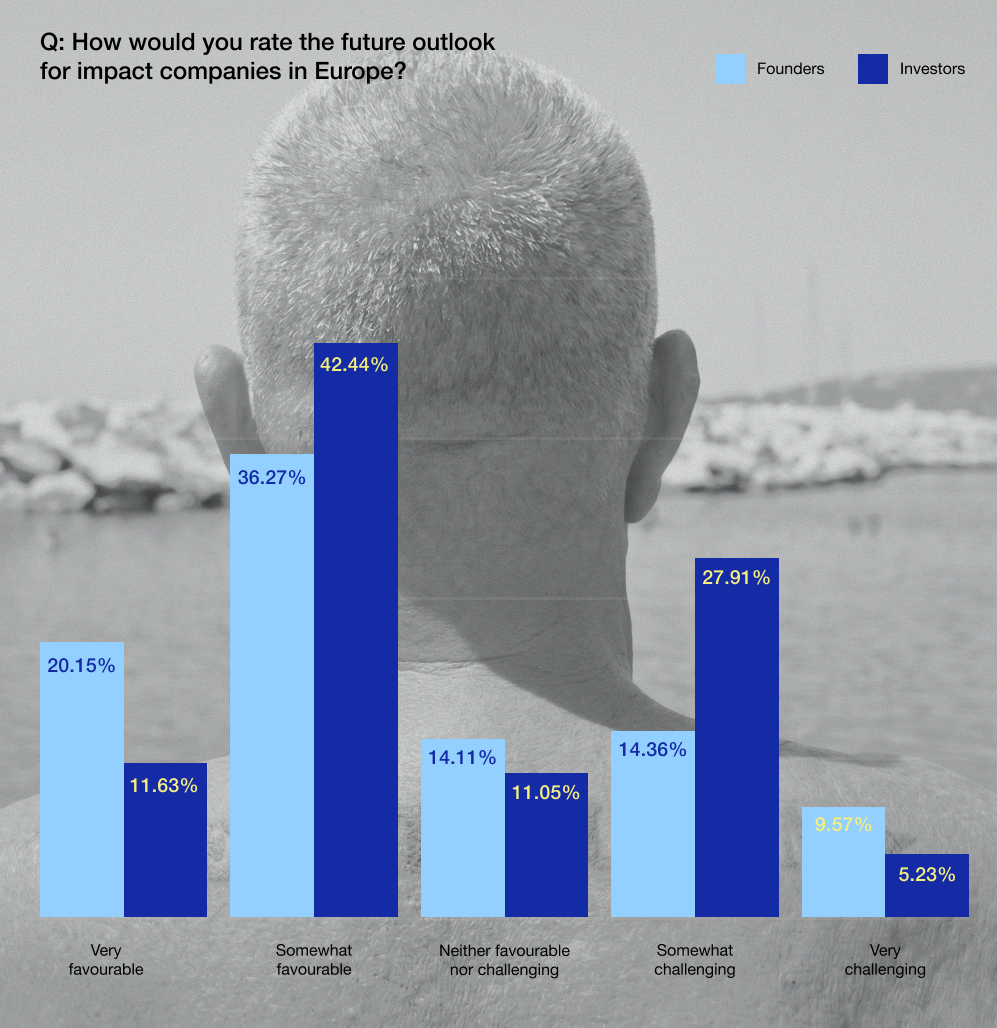
The confidence is even stronger when looking into the future. More than half of both founders and investors have a favourable outlook for companies solving Europe’s hardest problems. Founders are the more bullish of the two groups. One in five describe the outlook as very favourable, while fewer than one in ten see it as very challenging. Overall, positive founders outnumber negative ones by more than two to one.
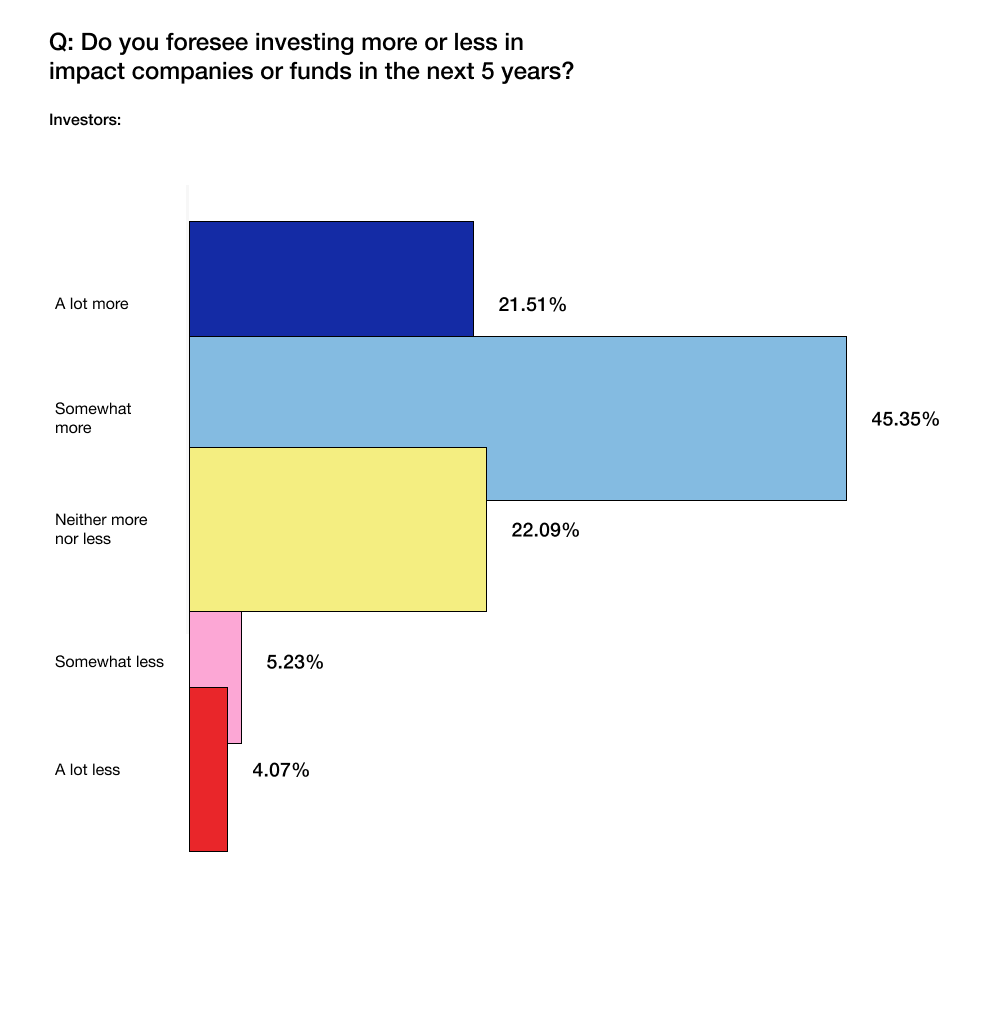
The optimism is also translating into investment plans. Two-thirds of investors plan to put more money into impact companies and funds over the next five years. Fewer than one in ten plan to put in less. For every investor stepping back from the theme, roughly seven are stepping toward it. The pace has eased a little from last year, but the drift is toward holding steady, not pulling out.
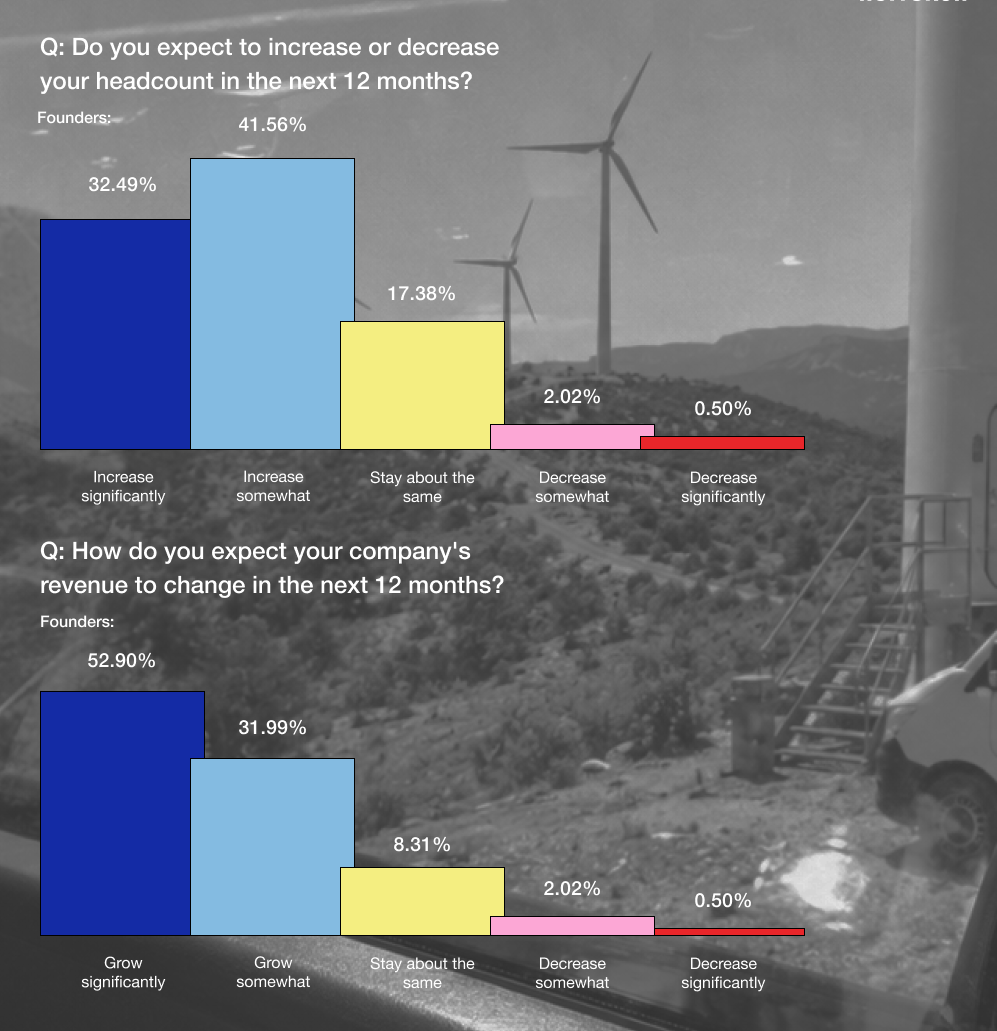
The founders themselves are seeing real traction on the ground. Three in four expect to increase headcount over the next year. Revenue expectations are even stronger: 85% expect sales to grow, and more than half expect significant growth.
There’s an interesting gap between the two. Founders expect their businesses to grow faster than their teams – a sign of the increasingly powerful efficiency gains that technology is unlocking across industries.
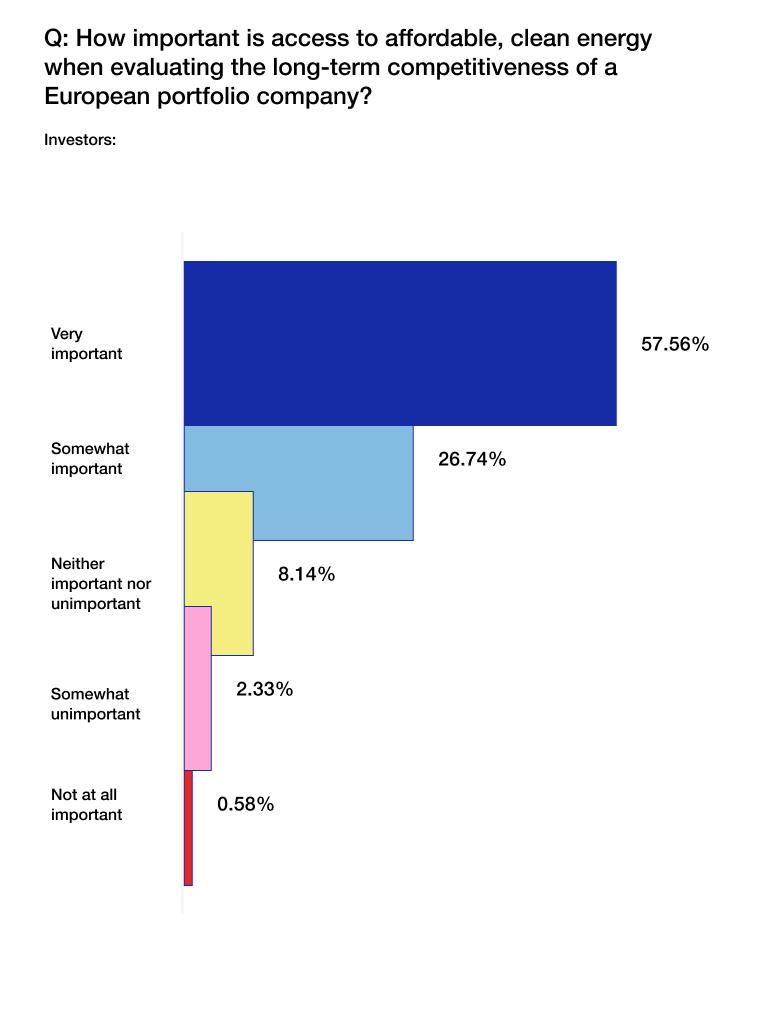
Europe’s biggest vulnerabilities increasingly overlap with some of its biggest investment opportunities. Expensive energy. Dependence on imported fuels. Resource constraints. The need to make industry dramatically more productive. Add rapidly growing electricity demand from AI and electrification, and technologies that help Europe do more with less happen to be the areas where the underlying economics have now turned.
That is reflected clearly in where investors want to put their money. For the second year running, Energy & Electrification tops the list, chosen by 37% of investors – more than three times the next closest sector.
There is even growing confidence that policymakers understand the enormity of the task that lies ahead. More founders think the EU does a good job of prioritising innovation and entrepreneurship than think it does a poor one. But understanding the assignment and completing it are two different things.
Europe may have a single market on paper, but founders still experience 27 markets in practice. More than half say regulatory differences between member states have made it harder to scale across borders – and that number has actually increased since last year.
So when founders and investors are asked what Brussels should prioritise next, the answer is clear: make the single market actually single. It ranks as the number one competitiveness priority for both groups.
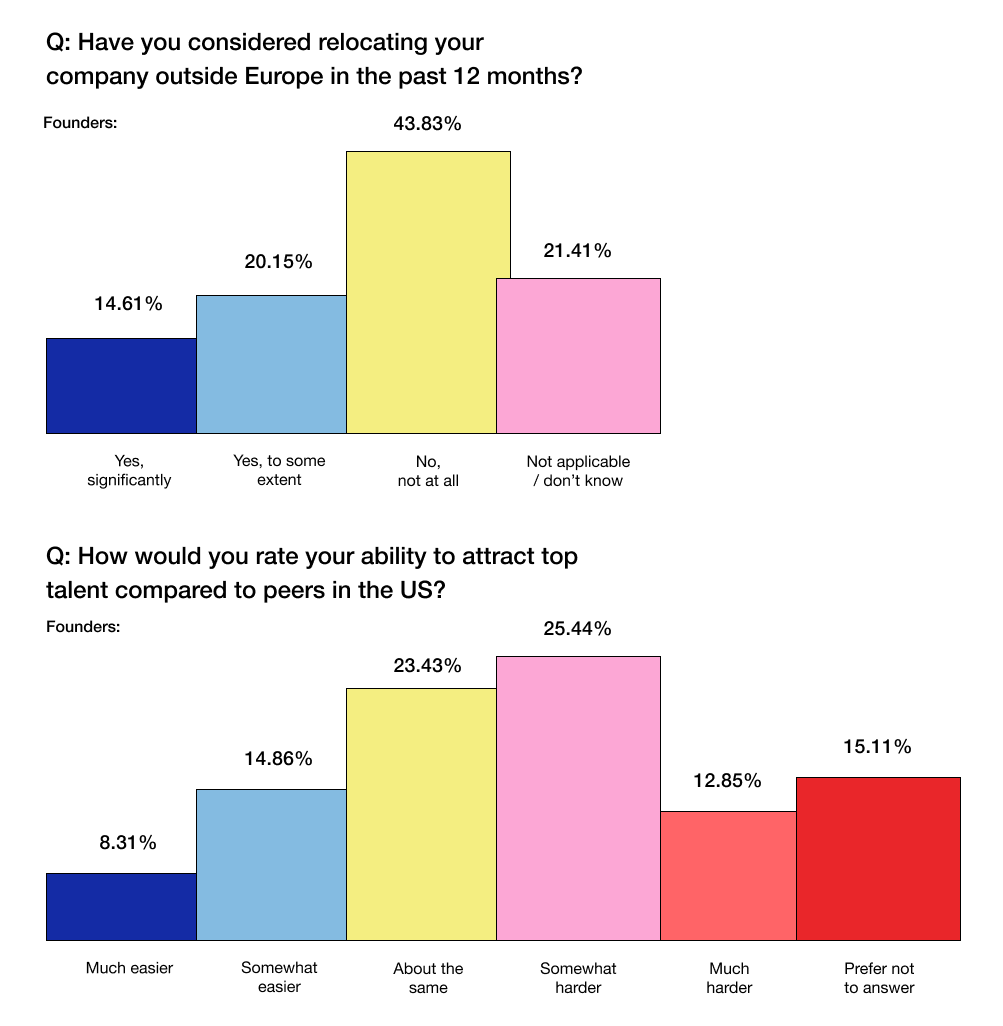
And there is a reason for the urgency. For all the growing Europtimism, Europe has not completely won over everyone yet. One in three have considered relocating their company outside the continent over the past twelve months, including 15% who have considered it seriously. Almost four in ten also say attracting top talent is harder in Europe than in the US.
Two years ago, Europe was asking whether it was worth betting on. This year, the people who build and fund it have answered. It is a vote of confidence, but it comes with a task. Optimism has not fixed the single market or closed the talent gap. Europe has become a more attractive place to start a company. Whether it becomes the obvious place to keep one is the next big question for Europe.