
.gif)



Ten companies building the solutions to run Europe on clean, domestic electricity.


Europe runs on fuel it does not own, shipped through waters it does not control. Three energy price shocks in four years have shown what that dependence costs. The one energy source it can produce at scale, on its own soil, is clean electricity, and an economy built on it is the only lasting way out.
Becoming an electro-continent is Europe's only path forward. Here are ten companies already building it.
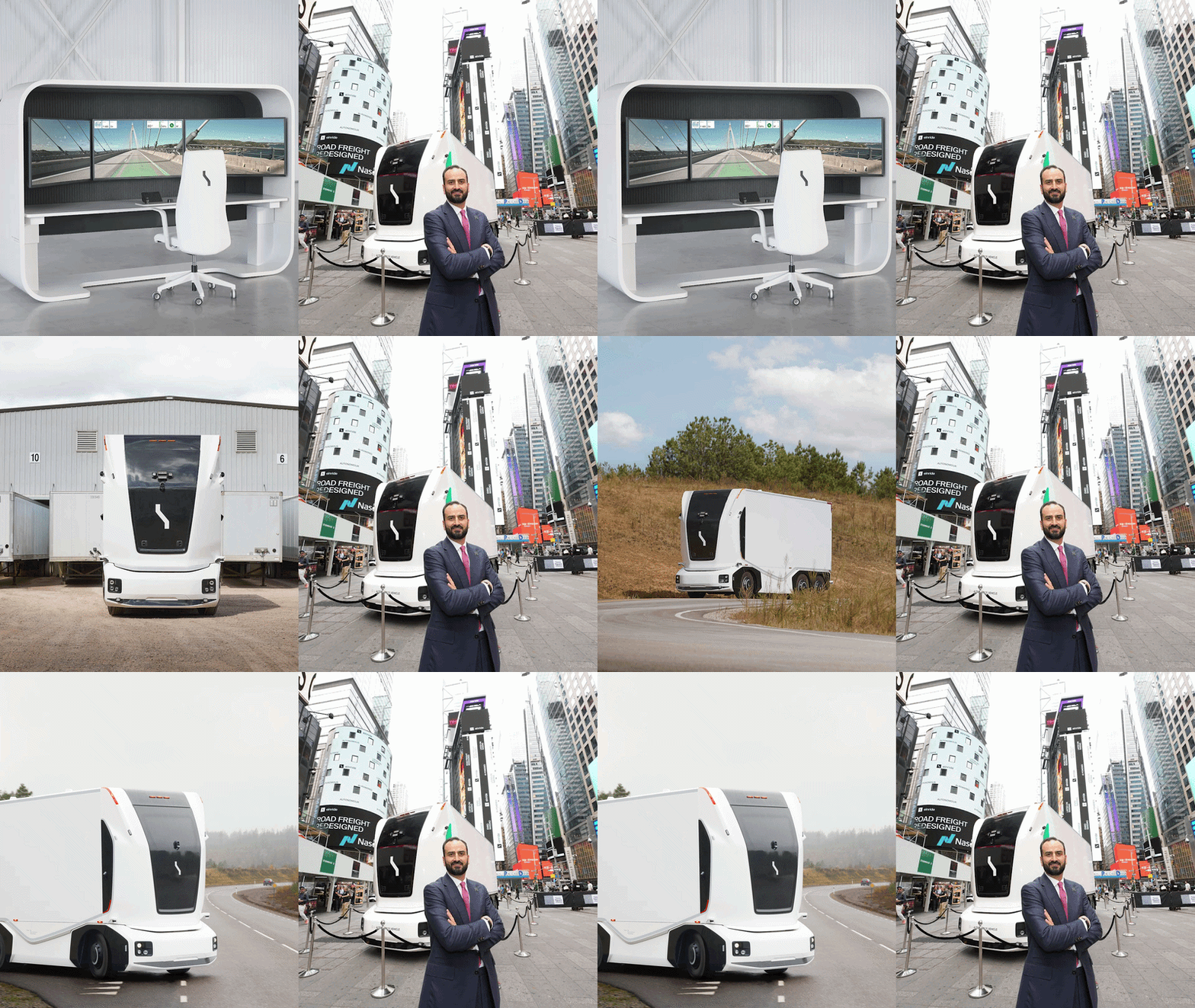
Road freight is one of the hardest things to electrify, and not because the trucks aren't ready. They are. The missing piece is operational. A diesel fleet refuels in minutes and keeps moving. An electric fleet has to optimize continuously across charging windows, routes, grid capacity, payload and battery health, and most operators are still trying to manage that with software built for diesel and topped up with spreadsheets.
Einride built its system specifically for electric freight. Its AI platform, Saga, has been refined across more than 17 million electric miles, and the gains are measurable: in one deployment, Saga's planning moved 85 percent of goods on electric trucks, against 57 percent for a conventional one-truck-per-route setup. Einride now runs one of the world's largest heavy electric fleets and serves more than 30 enterprise customers across seven countries, PepsiCo, Heineken, Mars and Lidl among them. It listed on the Nasdaq in mid-2026.
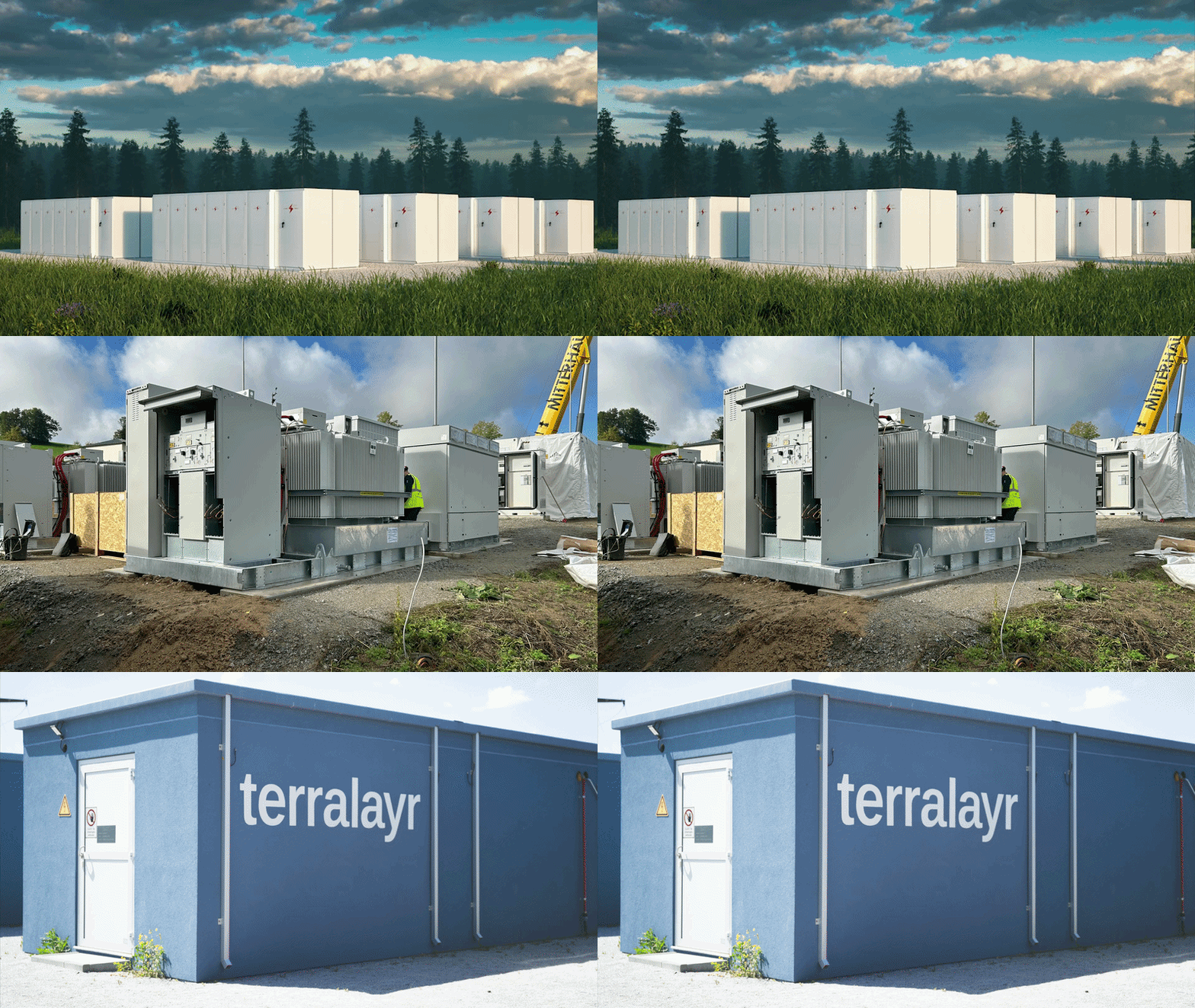
As Europe shifts to clean, domestic electricity, storing that power efficiently becomes one of the hardest problems to solve. In Germany alone, terralayr estimates that 6 TWh of renewable energy is wasted every year because the grid cannot move it, at a cost of €2.2 billion and 5 million tonnes of avoidable CO2. terralayr is rethinking storage with an "energy flexibility as a service" platform. Think of it as AWS, but for energy: a critical piece of making renewables scalable, flexible and reliable.
By virtualizing battery storage, terralayr lets renewable producers, grid operators and large power users tap storage capacity on demand, without owning the infrastructure. Treating flexibility as something you can buy and trade, rather than a fixed asset you have to build, is what makes batteries bankable and gets more of them built.
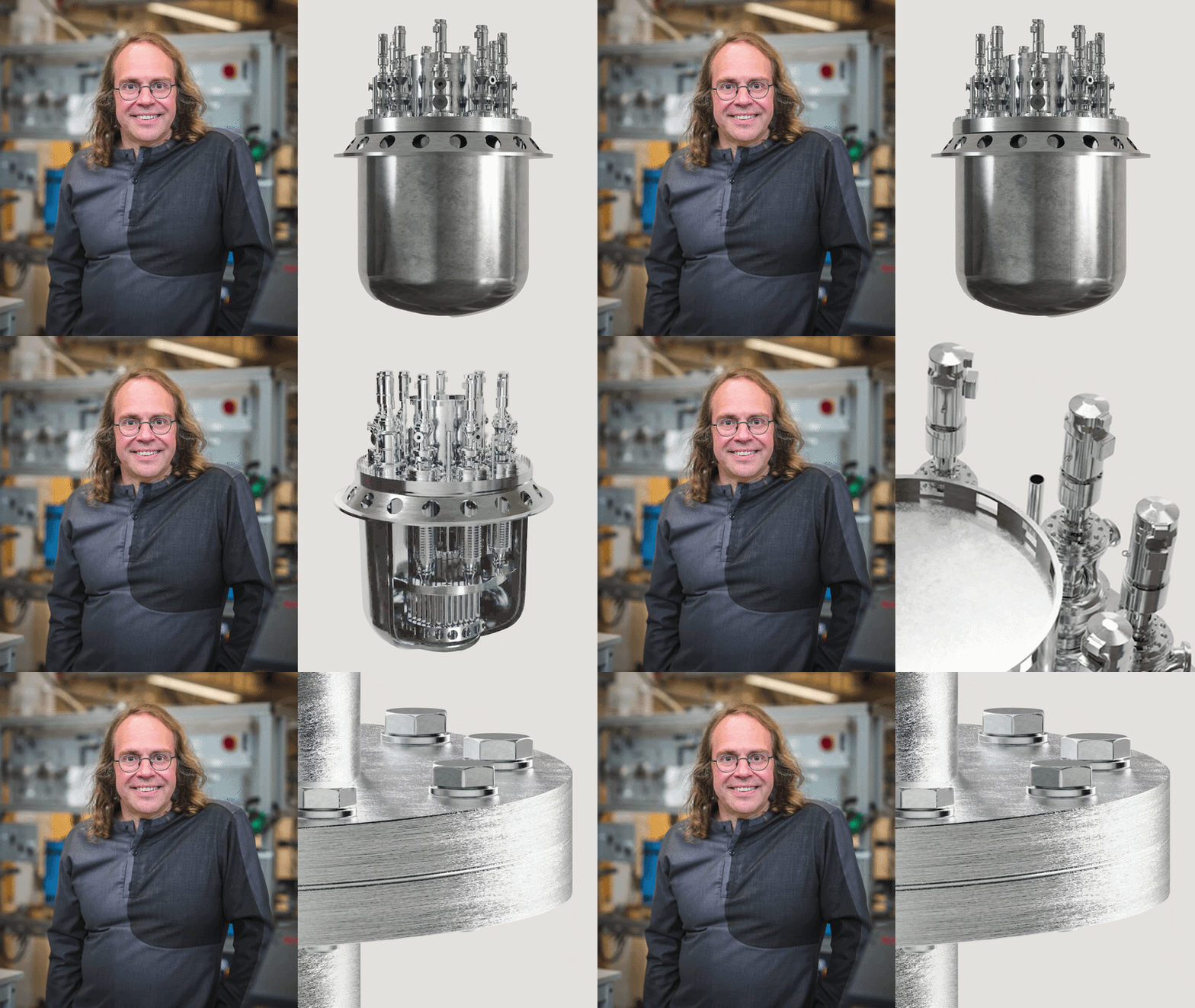
An electro-continent needs firm, around-the-clock power. The case against nuclear has always been cost and time: a conventional plant takes more than a decade and tens of billions to build, and arrives late and over budget often enough that financing it has become the real risk. Blykalla attacks that problem from the factory floor rather than the reactor core. Its SEALER is a small modular reactor cooled by liquid lead, compact enough to be built on a production line and shipped to site, which the company estimates can cut construction cost by up to 60 percent and build time by roughly 70 percent against a traditional large plant.
Lead is an excellent coolant, but it corrodes steel, which is why earlier lead-cooled reactors had short lives. Blykalla's patented aluminum-alloyed steels resist that corrosion, the difference between a laboratory curiosity and a commercial product. In June 2026 the company filed Sweden's first application under the country's new state-financing model, for a reactor park of six units: 330 MW, and an estimated 2.76 TWh of clean baseload a year.
As cheaper renewables replace costly fossil fuels, the grid grows more complex, less predictable and harder to manage. For industrial and commercial businesses, and mid-sized ones especially, that means higher costs, bigger risks and more uncertainty, all while they are trying to speed up their own decarbonization. Many want to act but are locked out by legacy systems and a lack of support. They need more than clean electricity. They need control, visibility and real savings to make it viable.
Trawa offers the infrastructure to cut both cost and carbon. Its platform pairs access to renewable electricity with AI software that optimizes how a company buys, uses and manages energy, folding in battery storage and other decentralized assets to ease grid strain, lift self-consumption and flatten peak loads. Customers can save up to 30 percent a year on electricity. An electro-continent only works if the broad middle of the economy can electrify on good terms, and that middle needs the control and visibility that, until now, only the largest players could afford.
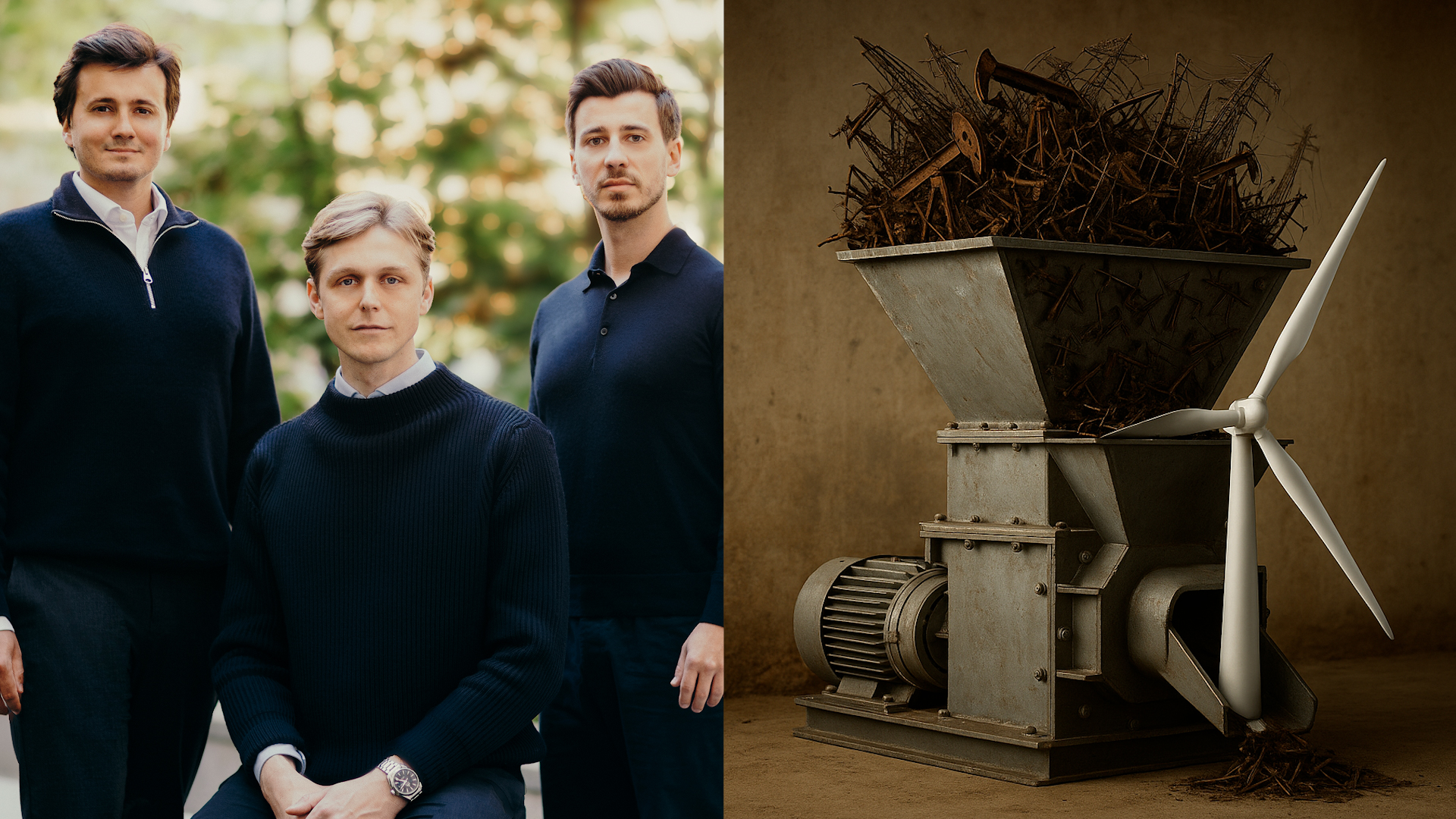
We won’t replace drill, pipes and dependence with clean, green and sovereign without rethinking our supply chains entirely. The energy transition demands immense amounts of minerals, among them copper. Not only is its mining synonymous with human rights abuses and ecosystems destruction, but Europe’s supply is particularly vulnerable, being heavily dependent on imports.
Circularity is a non-negotiable for Europe to become an electro-continent. Recupere Metals taps into an overlooked source: copper scrap. Their conductivity enhancing innovation enables millions of tons of copper currently unusable to be integrated in electric systems. This means no mining, no smelting, and no more copper wasting its potential in landfills. Instead, scrap copper is put back into the circuit, creating a low-cost, resilient supply chain of recycled copper to power our grid.
See Lazard Stack, L1.01 - Critical Minerals
Wind and solar are cheap and abundant, but they don't always arrive on the grid's schedule. That mismatch is the central operating problem of a renewable system, and it is the one Flower was built to solve. Its AI-driven platform trades and optimizes flexible energy assets, batteries, wind and solar parks, EV chargers, forecasting supply and demand and dispatching stored power where it is needed within seconds.
The proof came in June 2024, when the Forsmark nuclear plant dropped off the Swedish grid and Flower's battery system at Grums released stored renewable power to help hold supply steady. Flower has also become a serious battery developer in its own right, with the Nordics' largest portfolio of flexible assets. Smart storage and dispatch are what let a grid run on renewables without blackouts, and Flower is building both the software and the hardware.
Most of the flexibility Europe needs is already on the grid, unused: home batteries, rooftop solar, EVs and chargers, scattered across millions of households and untapped because coordinating them is fiendishly complex. Fever turns that complexity into a product other energy companies can sell. Its platform pulls distributed assets into a single coordinated resource and optimizes across both sides of the meter, cutting customers' bills while the assets earn on the balancing markets that keep the grid stable.
The deliberate choice is that energy companies run it under their own brand, on a proven platform, rather than building one from scratch. Fever connects modern and legacy assets alike and equips the teams operating them, on the principle that distributed energy only works when the people running it can actually use it. As electrification multiplies the number of small assets on the grid, software that makes them act as one is what turns a liability into a stabilizing resource.
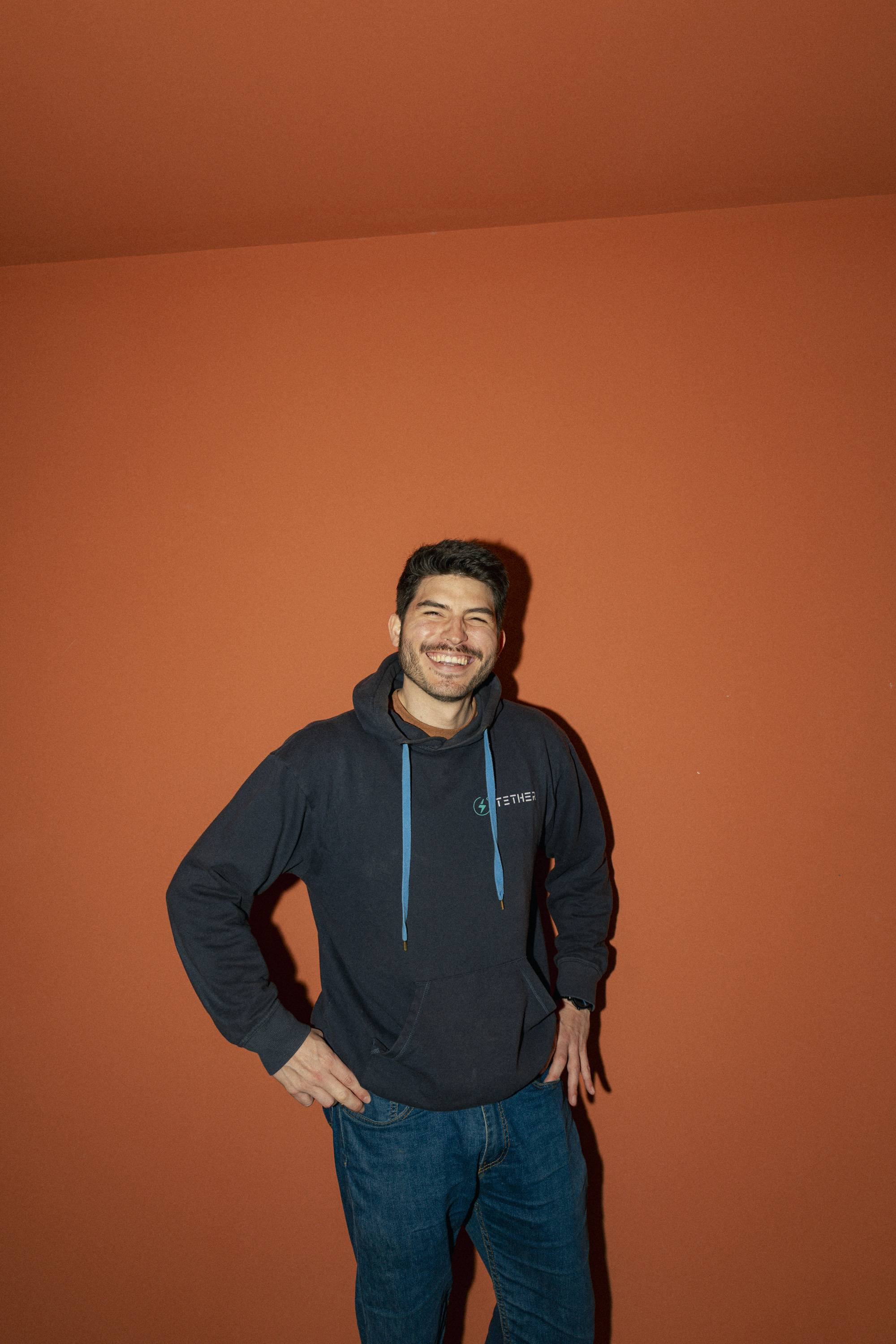
An electric vehicle is a big battery that spends about 95 percent of its life parked. Multiply that across a continent's worth of EVs and you have, in theory, the largest distributed battery ever assembled, sitting idle. Tether is building the AI to put it to work. Its engine learns how individual drivers behave and coordinates charging across millions of vehicles, shifting it to the moments when the grid has clean power to spare and feeding flexibility back through V1G and V2G participation in electricity markets.
For the driver, it is risk-free income from an asset they already own, and gentler wear on the battery, since how a battery rests matters as much as how it is used. For the grid, it is flexibility at vast scale without a single new power plant. The fleet of cars Europe is already buying to electrify transport becomes, with the right layer of software, a continent-sized buffer against the swings of wind and sun. In Tether's hands, the parked car is the cheapest grid asset Europe will ever deploy.
Electrification creates its own waste stream. As the first big wave of EVs ages out, their batteries will be retired with, typically, more than 80 percent of their storage capacity still intact. Discarding that would be wasteful and, given how concentrated battery supply chains are, strategically careless. Rebaba gives those batteries a second life, re-engineering retired EV cells into stationary storage for properties, industry and charging operators, with full control from cell to finished system.
The result cuts electricity costs and frees up power for its customers, while building storage out of material the continent has already imported once. Europe's transition risks trading dependence on imported fuel for dependence on imported batteries and panels, and reuse is one of the few levers that genuinely loosens that bind. Storage that is circular by design, made on European soil from European-owned material, is exactly the resilience an electro-continent will need.
Roughly a quarter of a lithium-ion battery is graphite, and in conventional recycling it ends up as contaminated, hazardous waste bound for landfill or incineration, a cost the recycler has to pay to get rid of. Jälle turns that liability into a product, upcycling graphite-rich battery residue into a high-performance carbon material used in energy storage, coatings, composites and electronics.
The company sits between two worlds: recyclers, who finally get a profitable outlet for their worst waste stream, and manufacturers, who get advanced materials without mining fresh graphite. As Europe pours billions into batteries, it cannot afford to throw away a quarter of every one it builds. Closing that loop strengthens the supply-chain resilience the whole electrification effort depends on, and turns a disposal cost into a domestic source of strategic material.
Together, these ten companies show an economy reorganizing itself around clean electricity. Some make the power. Some electrify the parts of the economy that still burn fuel. Most work on the gap in between. What they share is a single proof point: becoming an electro-continent is not only possible, it is already underway.
All ten have signed the open letter calling on Europe to become the Electro Union and run more than 50 percent of its economy on clean, domestic electricity by 2040.
If your company wants to add its name, you can sign the call here: https://www.norrsken.org/goodnews/make-europe-the-electro-union