.gif)



Three energy shocks in four years should settle the argument. Here's why Europe should now become the world’s first electro-continent.


Europe is living through its third energy price shock in four years. In 2022, Russia weaponised its gas pipelines. In 2023-24, conflict in the Red Sea disrupted shipping lanes. Now, war in the Middle East has effectively closed the Strait of Hormuz. Oil has breached $100 a barrel for the first time since Russia’s invasion of Ukraine. Stock markets are in freefall. European gas prices have surged roughly 70 percent. In the first 10 days of the conflict, the EU paid an additional €2.5bn for fossil fuel imports. Each time the trigger is different. The vulnerability is always the same: Europe runs on fuel it does not own, shipped through waters it does not control.
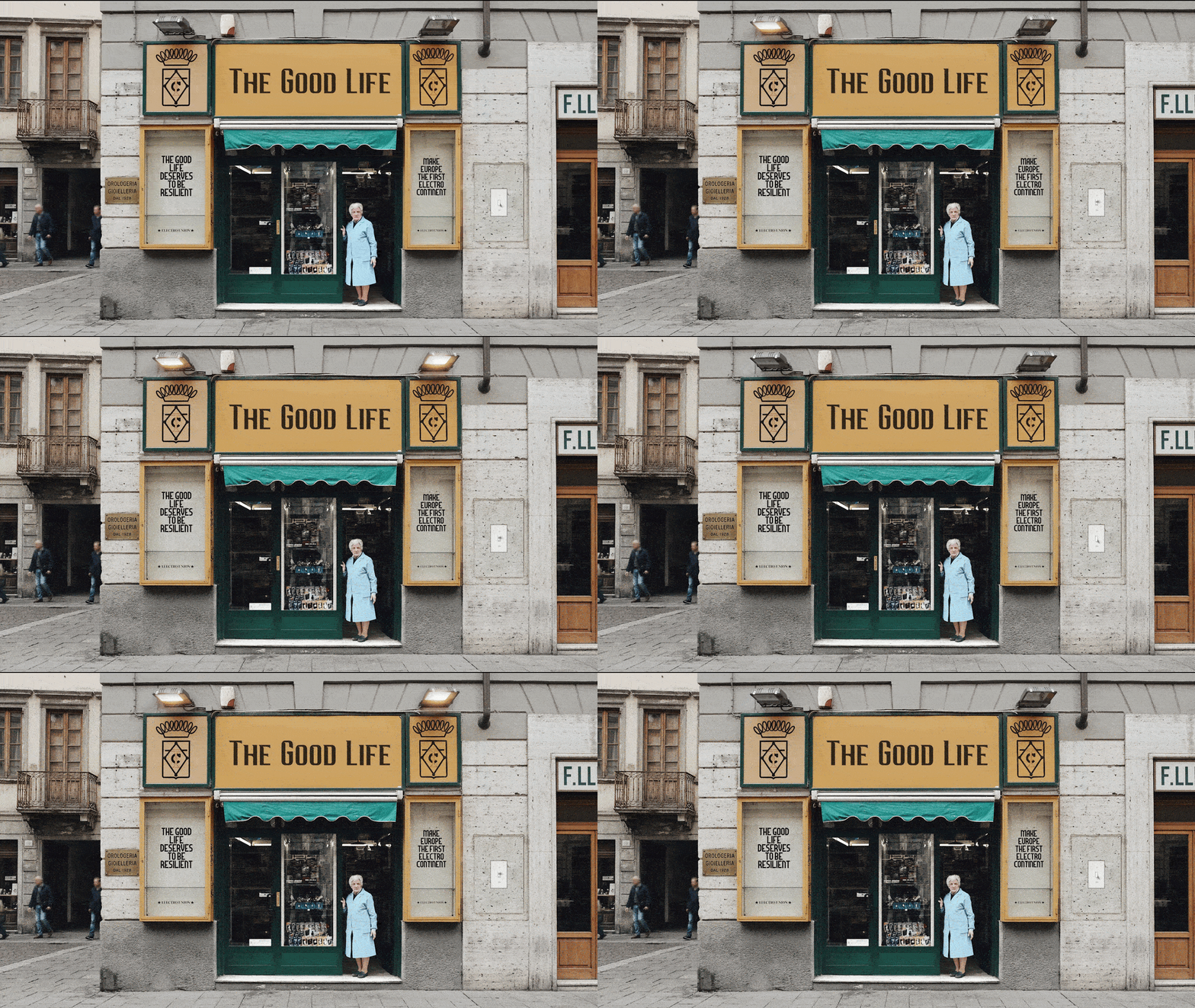
Wind, solar, hydro or nuclear energy cannot be embargoed, blockaded, or shut off by a foreign power. Every terawatt-hour of domestic renewable generation is a terawatt-hour that no adversary can weaponise. Unlike the US, Europe has no shale gas. Unlike China, it cannot fall back on cheap domestic coal. The only energy Europe can produce at scale, on its own soil, is renewable electricity. Europe must now become the world’s first Electro-Continent.
But this is not only about shielding ourselves from the next geopolitical shock. It is about building the foundation for the industrial era. The AI race is, more than anything else, an energy race. Training a single large AI model consumes as much electricity as thousands of households use in a year. The IEA projects that global data centre electricity consumption will more than double by 2030, reaching roughly 945 terawatt-hours: more than Japan consumes today. In the United States, data centres are on course to consume more electricity than all energy-intensive manufacturing combined by the end of the decade. The winner of this next industrial revolution will not be the region with the best engineers. It will be the region that can deliver the cheapest, most abundant, fastest-to-deploy power.

Europe is being squeezed from both sides. According to the IEA, industrial electricity prices in the EU in 2025 are roughly twice those in the United States and about 50 percent higher than in China, a gap that is widening. European founders are already world-class at innovation. But no amount of innovation can overcome a 100 percent overhead on your primary industrial input.

Both super powers have understood that energy abundance is a strategic necessity. According to Carbon Brief analysis of official data, China invested over $1 trillion in clean energy in 2025, treating renewables as a manufacturing technology whose sectors now account for over 11 percent of GDP. The United States enjoys the double advantage of cheap domestic shale gas and the massive capital of Big Tech, with hyperscalers signing multi-billion-dollar power purchase agreements to lock in electricity for AI infrastructure.
As Mario Draghi’s competitiveness report made painfully clear: Europe’s industrial base is bleeding out because of energy costs. If Europe wants to host the next generation of €100 billion companies in AI, industry, or manufacturing, it must fix the foundation. And that foundation is energy

Here is the good news: the market has already solved the cost problem. Renewable energy prices have dropped more than 90 percent over the past decade. In 2025, over 90 percent of new renewable capacity was cheaper than the fossil fuel alternative. Clean energy is now the cheapest and fastest form of new generation, full stop.
Europe's renewable share has grown through each successive crisis, and wind and solar generated more EU electricity than fossil fuels for the first time in 2025. But the gas tail still wags the dog. Even last year, a dip in wind and hydro output forced higher gas burn, pushing up the EU's fossil gas import bill by 16 percent and spiking electricity prices across 21 member states. Every remaining molecule of gas dependency is a transmission mechanism for the next foreign crisis.
China is on track to become the world's first electro-state: an economy that has made cheap, domestically produced electricity its primary competitive advantage – across manufacturing, AI infrastructure, and global trade. But Europe has something China does not: the integrated market to do this at continental scale. The EU’s Clean Industrial Deal, launched in February 2025, places renewables at the heart of industrial strategy. The vision is correct, but the execution is failing.
While Brussels sets the right direction, member states are actively undermining it. Last November, Sweden rejected 13 offshore wind projects in the Baltic Sea. Projects with a combined capacity of nearly 32 gigawatts, enough to roughly double the country’s electricity production. Private investments worth up to €47 billion were wiped out in a single announcement.
Sweden is not an outlier. Across Europe, permitting timelines stretch to a decade. Too many legislators are still listening to incumbent companies that need policy life-support to survive, rather than backing the technologies that already stand on their own in open markets. Renewables may have needed an early push. They do not need one now. The market is doing the heavy lifting. What it cannot do is overrule a permitting regime designed for a different era.
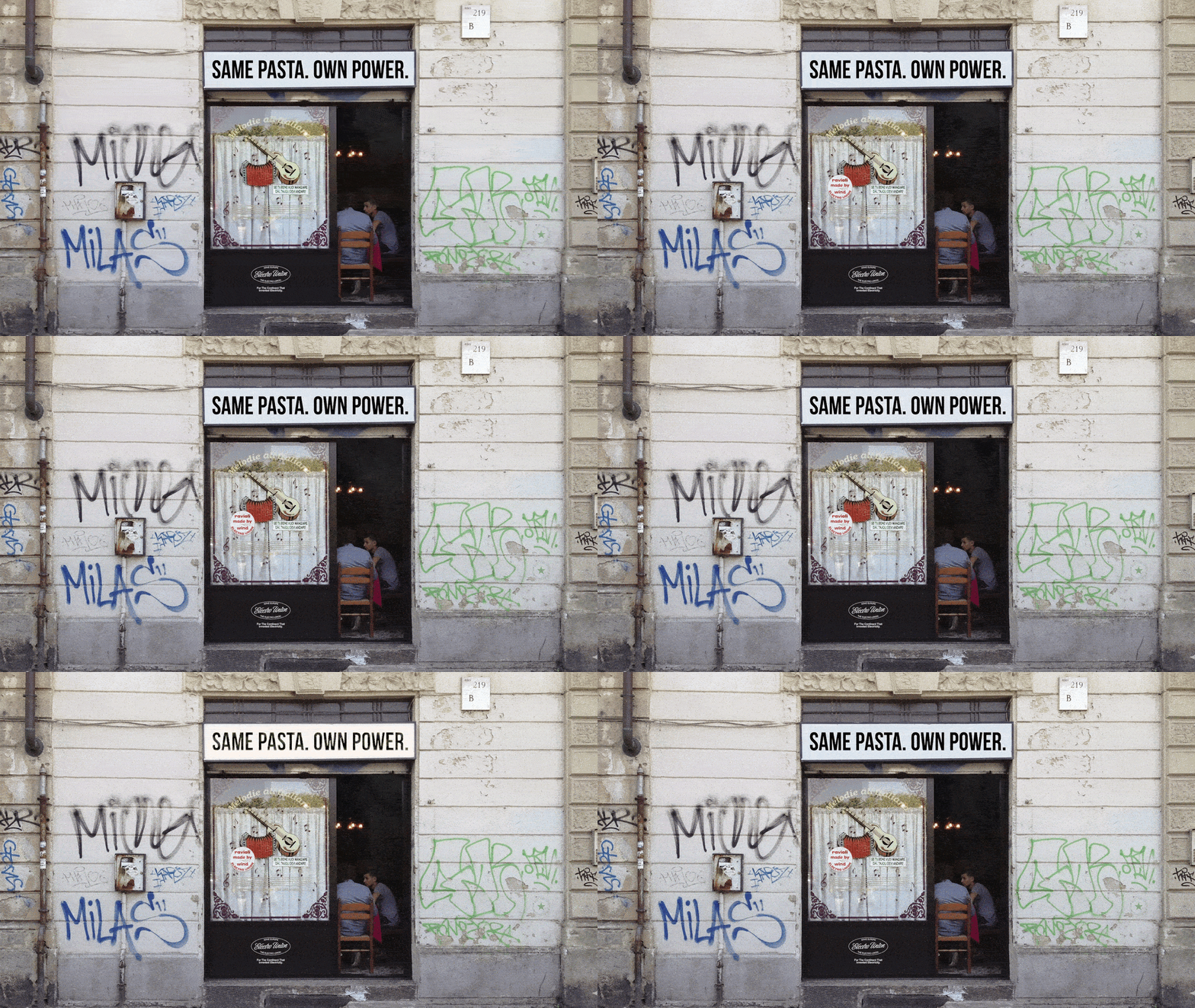
You cannot fight a trade war with China by starving your own industries of power. You cannot win the AI race with the world’s most expensive electricity. And you cannot build €100 billion companies on a foundation that cracks every time a foreign government closes a shipping lane.
Europe does not need more government handouts to win this race. It needs government permissions. The capital is there. Corporate giants are desperate for green electrons. Pension funds and infrastructure investors are ready to deploy. What is missing is not money or technology. It is the political willingness to let them build.
Energy permits must be treated as national security priorities, with the same urgency we apply to defence procurement. If a wind farm permit takes eight years but a war can close a strait in eight hours, the system is a strategic liability.
Three energy shocks in four years should settle the argument. The wind is blowing. The sun is shining. The capital is ready. All that is missing is the political courage to say yes.
*A shorter version of this text was previously published in Fortune.